
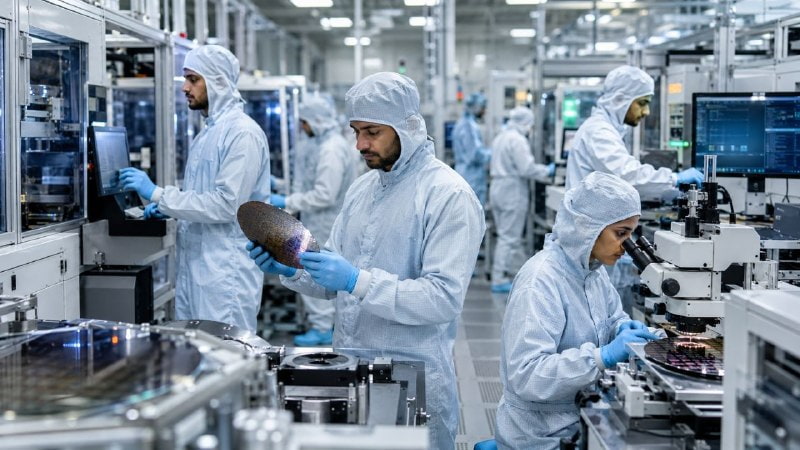
India’s semiconductor push is gaining serious momentum, with 7–8 New Semiconductor Plants expected to strengthen the country’s chip industry. But for students and job seekers, the bigger question is: Will this growth translate into more jobs?
From engineers and technicians to manufacturing, testing and support roles, the expanding semiconductor ecosystem could create a new wave of career opportunities for India’s young workforce.
Want to understand why practical skills are becoming more important in today’s job market?
Read: Why Companies Value Skills Over Degrees →Why Are 7–8 New Semiconductor Plants Important?
A semiconductor plant is not just a factory—it can become the centre of a much larger job ecosystem. India’s growing semiconductor manufacturing push could create opportunities across engineering, electronics, production, testing, maintenance and supply-chain operations.
Semiconductors power smartphones, electric vehicles, computers, AI systems and defence technology. Expanding domestic production can strengthen India’s manufacturing capabilities and reduce dependence on imported chips.
For students and job seekers, the opportunity could extend beyond the plants themselves. Suppliers, logistics companies, equipment manufacturers and technical service providers may also need skilled workers, creating a wider range of career opportunities in India’s growing semiconductor ecosystem.
Official Source: India Semiconductor Mission (ISM)
How Could These Plants Create Jobs?
The biggest impact for job seekers could be the creation of direct employment across semiconductor manufacturing and related facilities.
Some of the major career areas could include:
- Semiconductor and electronics engineering
- Chip manufacturing and fabrication
- Equipment maintenance
- Quality control and testing
- Electrical and mechanical engineering
- Automation and robotics
- Data and software roles
- Supply-chain and logistics
- Research and development
- Plant operations and technical support
There can also be a much wider indirect employment effect.
When a semiconductor plant comes up, suppliers, component manufacturers, logistics companies, maintenance providers and other supporting businesses often develop around the industrial ecosystem. This can create additional opportunities beyond the main facility.
Read more: Semicon 2.0: Government’s Semiconductor Expansion Plan
Which Students Could Benefit?
Students from electronics, electrical, mechanical, computer science and instrumentation backgrounds could find relevant opportunities as India’s semiconductor ecosystem expands. Diploma holders and ITI-trained candidates may also be considered for technical, maintenance, production and equipment-related roles, depending on company requirements.
Students studying physics, chemistry, materials science and related fields could also benefit from opportunities in testing, research and semiconductor manufacturing.For job seekers, combining a relevant qualification with practical skills could improve their chances of entering this emerging industry.
As the semiconductor industry grows, skills will matter alongside degrees. Candidates with practical knowledge of electronics, automation, programming, equipment handling and quality control could have an advantage. Internships, technical courses, hands-on projects and industry-focused training can help students prepare for entry-level roles.
Will Semiconductor Jobs Be Available for Freshers?
Freshers could find entry-level opportunities as the semiconductor ecosystem expands, although the exact number and type of jobs will depend on individual companies and their recruitment plans.
Large semiconductor facilities generally require employees across different levels. While highly specialised positions may demand experience or advanced qualifications, entry-level roles can exist in areas such as production operations, testing, maintenance, quality control and technical support.
This could be particularly important for diploma holders, engineering graduates and technically trained young people looking for manufacturing-sector careers.
Watch the latest update on India’s semiconductor expansion, new plants and the potential impact on jobs:
A Bigger Opportunity for India’s Youth
The growth of India’s semiconductor industry could create opportunities far beyond the plants themselves. As manufacturing expands, supporting industries such as electronics, equipment, logistics and technology services may also grow, creating more career options for young people.
For students and job seekers, this could be a chance to enter a high-tech sector linked to AI, electric vehicles, smartphones and defence technology.
Students preparing for competitive exams can also explore this useful guide on free online coaching opportunities.
Read: PM Modi Free Online Coaching for Competitive Exams →What Should Students Do Now?
Students interested in the semiconductor sector can start preparing before large-scale hiring begins. Building basic knowledge of electronics, semiconductor technology, automation and programming, along with practical projects, internships or industry-focused courses, can help candidates become better prepared for future opportunities.
For jobs in India, the impact could go beyond factory employment.New plants may increase demand for engineers, technicians, production workers, quality-control professionals and supply-chain specialists, while supporting businesses could generate additional employment around these facilities. For India’s young workforce, this growth could open new career paths in a high-tech industry and make semiconductor skills increasingly valuable in the job market.
Final Thought
India’s semiconductor push is not just about making chips—it could shape a completely new generation of jobs, skills and career opportunities. As new plants, suppliers and technology companies develop around this sector, demand for skilled professionals is likely to grow across manufacturing, engineering, testing, maintenance and other technical fields.
For students and young professionals, this is a good time to start paying attention to the semiconductor industry. Those who build practical skills today could be in a stronger position to take advantage of the opportunities created as India’s chip ecosystem expands.
FAQs
1. What are the 7–8 New Semiconductor Plants ?
They refer to planned semiconductor manufacturing and related facilities being developed as part of India’s broader effort to expand domestic chip production.
2. Will these plants create jobs?
They are expected to create direct and indirect employment across manufacturing, engineering, testing, maintenance, logistics and supporting industries.
3. Can freshers get semiconductor jobs?
Freshers may find entry-level opportunities depending on individual companies and their recruitment requirements.
4. Which qualifications are useful for semiconductor careers?
Engineering, diploma and technical qualifications in electronics, electrical, mechanical, instrumentation, computer science and related fields can be relevant for different roles.
5. Should students learn semiconductor technology now?
Students interested in electronics, engineering and emerging technology can benefit from learning semiconductor fundamentals and developing practical