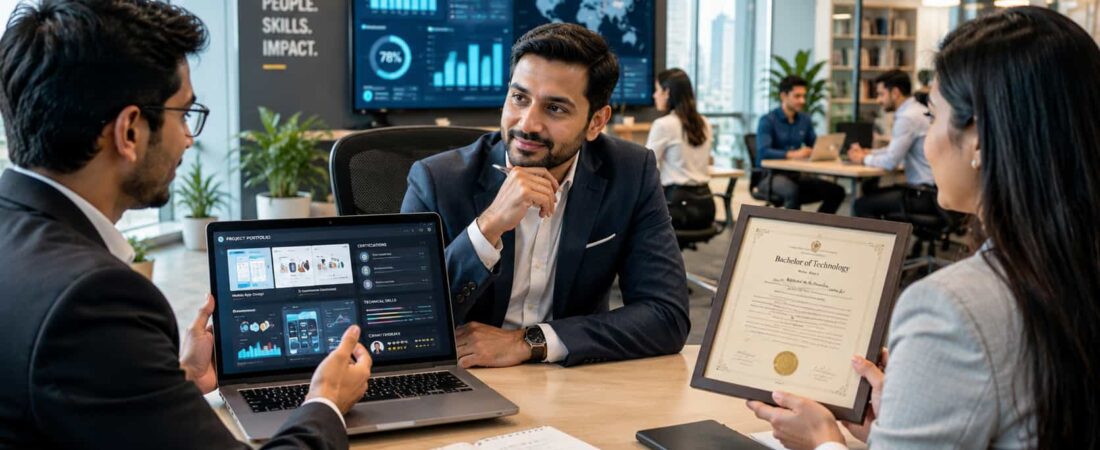
Imagine spending years earning a college degree, only to see someone with practical skills and a strong portfolio get the job you wanted. That’s becoming increasingly common in today’s job market. Why Companies Value Skills Over Degrees has become one of the biggest hiring trends in 2026, as employers focus more on real-world abilities than academic qualifications alone. Companies want candidates who can solve problems, adapt quickly, and contribute from day one. A degree still matters, but it’s no longer the only factor that influences hiring decisions. In this article, you’ll discover why companies are embracing skill-based hiring, which skills employers value the most, and how you can prepare yourself for the future of work.
Top 7 Careers That Will Dominate the Next Decade
Discover the fastest-growing career paths that could shape the future job market and the skills needed to succeed in these fields.
Table of Contents
A Degree Is No Longer the Whole Story
For years, a college degree was seen as the key to a successful career. Recruiters often used it as the first filter while hiring, believing it reflected a candidate’s knowledge and potential. While that hasn’t completely changed, it’s no longer the only factor that influences hiring decisions.
Today’s companies are looking beyond academic qualifications because the workplace is evolving faster than ever. Employers need people who can solve problems, adapt to new technologies, and contribute from day one. A degree may show what you’ve studied, but practical experience, projects, internships, and industry skills often reveal what you can actually achieve in the workplace.
That’s why two candidates with similar degrees can receive very different responses from employers. The one who has built a portfolio, completed internships, or learned in-demand tools usually has an advantage because they can demonstrate their abilities with real examples. In today’s job market, a degree opens the door, but it’s your skills that often decide how far you go.
Why Employers Are Looking Beyond Degrees
A college degree still plays an important role in building a career, but employers no longer see it as the only measure of a candidate’s potential. In today’s fast-changing workplace, businesses need people who can learn quickly, solve real problems, and adapt to new technologies. That’s why hiring decisions are increasingly based on what candidates can demonstrate, not just what they studied.
Take the technology industry as an example. A graduate who has built software projects, contributed to open-source platforms, or completed cloud certifications often attracts more attention than someone with similar academic qualifications but no practical experience. The same trend is visible in digital marketing, design, and data analytics, where portfolios and real-world results frequently carry more weight than classroom grades.
This shift isn’t about replacing degrees—it’s about adding another layer to the hiring process. Employers want evidence that candidates can apply their knowledge in real situations and continue learning as industries evolve. As a result, education remains valuable, but practical skills are increasingly becoming the factor that helps candidates stand out in a competitive job market.
What’s Driving the Shift to Skills-First Hiring?
The demand for skills-first hiring has grown alongside the rapid transformation of the workplace. Just a few years ago, many jobs focused on performing repetitive tasks. Today, businesses are investing in Artificial Intelligence, automation, cloud technology, and digital tools that require employees to think critically, solve problems, and keep learning throughout their careers.
This change is visible across industries. A software company may prefer a candidate with a strong GitHub portfolio over someone who only lists programming languages on a resume. A marketing agency is more likely to hire someone who has successfully managed real campaigns than someone who has only studied marketing in the classroom. Employers want proof that candidates can apply their knowledge in real situations.
Hiring methods have changed as well. Interviews are increasingly supported by technical assessments, portfolio reviews, and practical assignments because they reveal how candidates perform beyond academic achievements. As technology continues to reshape every industry, companies are choosing people who can adapt, learn quickly, and contribute from day one. That’s why skills-first hiring is becoming a long-term hiring strategy rather than a passing trend.
Link: OECD Report on Skills-First Hiring
The Skills Employers Actually Want in 2026
In 2026, employers are hiring people who can create value from day one. While technical knowledge remains important, companies are increasingly looking for candidates who can adapt quickly, solve problems, and work confidently with modern technologies. The goal is no longer to hire someone who knows the most—it’s to hire someone who can learn, grow, and deliver results.
The skills employers value the most include:
- AI Literacy – Using AI tools effectively in daily work.
- Problem-Solving – Finding practical solutions to business challenges.
- Data Analysis – Understanding and using data to make better decisions.
- Communication – Sharing ideas clearly and working well with teams.
- Adaptability – Learning new technologies and adjusting to change.
- Leadership & Teamwork – Taking initiative while collaborating with others.
Whether it’s software development, digital marketing, finance, or healthcare, employers are increasingly choosing candidates who can demonstrate these skills through projects, internships, or real-world experience. In today’s job market, practical ability often speaks louder than qualifications alone.
AI Won’t Replace These Jobs: Future-Proof Careers That Will Thrive
Explore careers that are expected to remain valuable in the age of AI and understand why human skills, creativity, and adaptability will continue to matter.
The Biggest Mistake Many Graduates Still Make
Many graduates believe that earning a degree is the final step before starting a successful career. In reality, it’s often just the beginning. Today’s employers want candidates who can demonstrate practical skills, solve real problems, and adapt quickly to changing workplace demands.
That’s why graduates who invest time in internships, personal projects, certifications, or freelance work often have an advantage during recruitment. These experiences provide real examples of what they can do, making interviews more convincing than academic achievements alone.
Another common mistake is delaying skill development until after graduation. The most competitive candidates start building their portfolios while they’re still in college, giving them valuable experience before they enter the job market.
In today’s hiring landscape, a degree can help you get noticed, but continuous learning and practical experience are what truly help you stand out.
How Students Can Stay Ahead of the Competition
Standing out in today’s job market isn’t about collecting the most certificates—it’s about building skills that employers can actually see. Students who start gaining practical experience during college often have a clear advantage because they graduate with both knowledge and real-world exposure.
Simple steps can make a big difference. Completing internships, working on personal projects, earning industry-recognized certifications, learning AI tools, or contributing to open-source projects can strengthen both your resume and your confidence. Even small achievements demonstrate initiative and a willingness to learn—qualities that employers consistently value.
The students who stay ahead aren’t necessarily the smartest or the most experienced. They’re the ones who keep learning, adapt to change, and continuously improve their skills. In a workplace that evolves every year, curiosity and consistent effort often become the biggest career advantages.
🔗 Link: OECD Skills-First Labour Market Report
Will College Degrees Still Matter in the Future?
College degrees aren’t disappearing anytime soon. In professions such as medicine, law, engineering, and teaching, formal education will continue to be essential because these careers require specialized knowledge and recognized qualifications. A degree will remain an important foundation for millions of professionals.
What is changing is the way employers evaluate candidates after that foundation is in place. In many industries, recruiters are increasingly looking for practical experience, digital skills, and the ability to adapt to new technologies alongside academic qualifications. A candidate who combines a degree with internships, certifications, and real-world projects is often in a much stronger position than someone who relies on education alone.
The future of hiring isn’t about choosing between degrees and skills—it’s about combining both. As workplaces continue to evolve, the professionals who keep learning, upgrading their skills, and applying their knowledge in real situations will be the ones who stay ahead, regardless of where they started their careers.
Final Thoughts
The way companies hire is changing, but one thing remains clear: learning never stops. A college degree can give you knowledge and opportunities, but the ability to apply that knowledge through practical skills is what creates long-term career growth.
The professionals who succeed in the future will not be defined only by their qualifications. They will be the ones who keep improving, adapt to new challenges, and continue building valuable skills throughout their careers.
The job market may keep changing, but the advantage will always belong to those who are ready to learn, evolve, and create real impact.
Latest Government Job Notifications Today
Stay updated with the latest government recruitment opportunities, important vacancies, eligibility details, and application updates.
Frequently Asked Questions (FAQs)
1. Are skills becoming more important than college degrees?
Yes, skills are becoming increasingly important in many industries. While degrees still provide valuable knowledge and credibility, employers are paying more attention to practical experience, problem-solving ability, and the skills candidates can demonstrate in real situations.
2. Will companies stop requiring college degrees in the future?
No, college degrees will continue to matter, especially in fields like medicine, law, and engineering. However, many companies are expanding their hiring approach by considering skills, experience, and practical achievements along with educational qualifications.
3. What skills will employers look for in 2026?
Employers are expected to value skills such as AI literacy, problem-solving, communication, data analysis, adaptability, digital skills, teamwork, and the ability to learn new technologies quickly.
4. How can students prepare for skill-based hiring?
Students can prepare by gaining practical experience through internships, personal projects, certifications, freelancing, and learning industry-relevant tools. Building a strong portfolio can also help demonstrate their abilities to employers.
5. Is a degree still worth it in today’s job market?
Yes, a degree is still valuable because it builds foundational knowledge and can be required for many careers. However, combining a degree with practical skills and real-world experience gives candidates a stronger advantage.