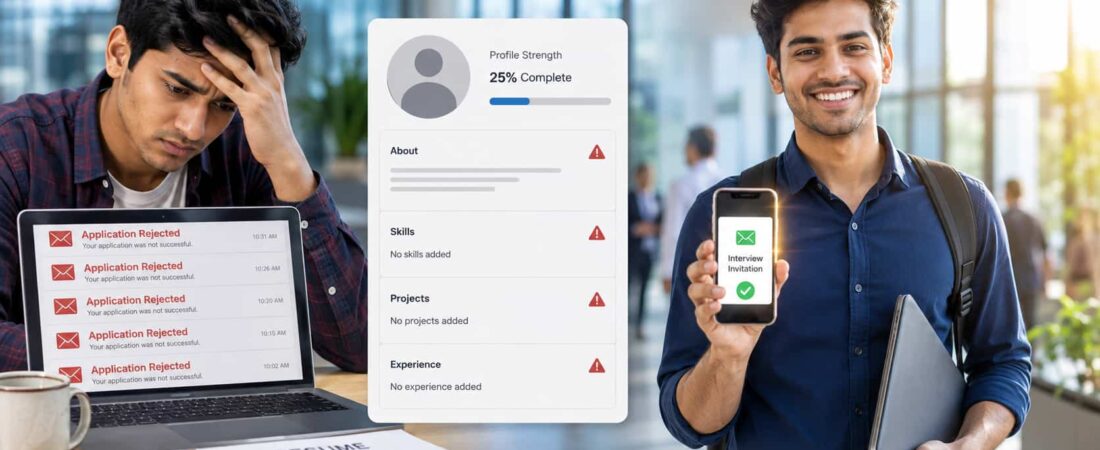
You apply for one internship. Then another. Soon you’ve sent your resume to dozens of companies, but your inbox stays silent. A few days later, someone from your class announces on LinkedIn that they’ve landed the internship you wanted too.
That’s the moment when most students start questioning themselves.
The truth is, the problem isn’t always your resume or your marks. LinkedIn Mistakes for Students often go unnoticed, yet they can quietly reduce your chances of getting shortlisted. Before many recruiters schedule an interview, they spend less than a minute scanning a candidate’s LinkedIn profile. Those few seconds are enough to decide whether they should keep reading or move on.
The good news? You don’t need years of experience to stand out. By fixing a few common mistakes and presenting your skills the right way, you can make your profile more visible, more professional, and far more likely to catch a recruiter’s attention.
Latest Education Updates Every Student Should KnowTable of Contents
LinkedIn Mistakes for Students That Recruiters Notice First
The biggest mistake doesn’t start with a bad profile—it starts with the belief that LinkedIn can wait.
Most students create an account during college, upload a profile picture, add their university name, and promise themselves they’ll complete the rest later. But “later” usually arrives only when placement season begins or an internship opportunity suddenly appears. By then, recruiters may already have viewed an incomplete profile and moved on.
First impressions happen much faster than most students think. Before reading your achievements, recruiters notice your profile photo, headline, and the first few lines of your profile. If those sections look incomplete or generic, many won’t spend another minute exploring the rest of your profile. They simply move to the next candidate.
This is where many opportunities quietly disappear.
A headline that says only “Student” or “College Student” doesn’t explain who you are or where you’re heading. Recruiters should immediately understand your career direction. Whether you’re learning Data Analytics, Software Development, UI/UX Design, Digital Marketing, Finance, Cybersecurity, or Artificial Intelligence, your headline should clearly reflect your goal.
The same problem continues inside the profile. Many students leave the About section empty, forget to add projects, skip certifications, and never update their skills. To a recruiter, it doesn’t look like you’re inexperienced—it looks like you’re not interested enough to showcase your work.
And that’s unfortunate because recruiters don’t expect students to have years of experience. They simply want proof that you’re learning beyond the classroom.
Imagine two students applying for the same internship. Both have similar marks. Both know the required skills. The only difference is that one profile highlights projects, certifications, and practical learning, while the other looks unfinished. Recruiters don’t have time to guess who has more potential. They naturally choose the profile that builds confidence within seconds.
Another mistake students make is trying to impress recruiters with big words instead of real work. Terms like “hardworking,” “quick learner,” and “self-motivated” appear on thousands of LinkedIn profiles every day. Recruiters have seen them countless times. What actually grabs attention is a portfolio, a GitHub repository, a research project, a design case study, a marketing campaign, or even a well-executed college assignment. Real work always speaks louder than impressive adjectives.
Many students also don’t realize that LinkedIn works like a search engine. Recruiters don’t search for random names—they search for skills. If your profile naturally includes keywords related to your field, LinkedIn is more likely to show your profile in recruiter searches. Without those keywords, your profile may never appear, no matter how capable you are.
Even after creating a good profile, another mistake slowly reduces visibility—becoming inactive. Months pass without adding a project, earning a certification, sharing a learning experience, or engaging with professional content. An inactive profile quietly suggests that career growth isn’t a priority. On the other hand, students who occasionally share what they’re learning often leave a stronger impression, even if they have the same academic background.
Networking is another area where students unknowingly hold themselves back. Some send hundreds of random connection requests hoping that bigger numbers will create better opportunities. Others never connect with anyone outside their college because they feel networking is only for experienced professionals. The truth lies somewhere in between. Building genuine connections with alumni, recruiters, professors, mentors, and professionals in your field creates opportunities that job portals often cannot.
Finally, there’s one mistake that almost every student makes at least once—they wait until they need a job before improving their LinkedIn profile.
By then, recruiters have already started searching.
The students who receive more interview calls aren’t always the ones with the highest CGPA. They’re usually the ones who consistently learn new skills, showcase their work, update their profiles, and build credibility long before placement season begins.
Here’s something every student should remember:
Recruiters rarely reject students because they lack experience. They reject profiles that fail to show curiosity, growth, and real potential.
Your resume may help you apply for a job, but your LinkedIn profile often decides whether a recruiter wants to know more about you. Spend a few minutes improving it today—you might be surprised how much difference those small changes can make before your next application.
Want to make your profile more professional? Read LinkedIn’s official guide on how to create a good LinkedIn profile: How to Create a Good LinkedIn Profile
How to Fix Your LinkedIn Profile and Get More Recruiter Attention
The good news is that every mistake you’ve read about so far can be fixed. You don’t need premium courses, years of experience, or hundreds of connections. In most cases, a few smart changes can make your profile look far more professional and increase your chances of getting noticed.
Start by looking at your profile from a recruiter’s perspective. If someone visited your LinkedIn profile today without knowing you, would they immediately understand what you’re good at and what kind of role you’re looking for? If the answer is no, that’s the first thing to improve.
Replace a generic headline with one that clearly reflects your career goal. Instead of writing only “Student,” mention the field you’re preparing for, such as Software Development, Data Analytics, Digital Marketing, UI/UX Design, Finance, Cybersecurity, or Artificial Intelligence. A clear headline helps recruiters understand your profile within seconds.
Next, rewrite your About section in your own words. You don’t need complicated language or motivational quotes. Briefly explain what you’re studying, the skills you’re building, the projects you’ve completed, and the type of internship or job you’re looking for. Authenticity always creates a stronger impression than copied content.
Your projects deserve more attention than your claims. If you’ve built a website, created a design portfolio, completed a research project, developed an app, earned certifications, or participated in a hackathon, make sure they’re visible on your profile. Recruiters trust evidence far more than promises.
Don’t forget to update your Skills section regularly. Every new tool, technology, or certification you learn should be reflected on your profile. This not only strengthens your profile but also improves your chances of appearing in recruiter searches.
Another habit that makes a real difference is staying active. You don’t need to post every day. Sharing a project you’ve completed, a certification you’ve earned, or a useful lesson you’ve learned every few weeks is enough to show that you’re continuously improving. Consistency matters much more than frequency.
Finally, focus on building meaningful connections instead of chasing numbers. Connect with alumni, professors, recruiters, mentors, and professionals working in your target industry. A small network of relevant people is often far more valuable than thousands of random connections.
Remember, LinkedIn isn’t something you update only when placements begin. The students who receive more opportunities are usually the ones who build their profiles long before they actually need a job.
A recruiter may spend only a few seconds on your profile, but those few seconds can completely change your career journey. Start improving your profile today, because your next interview invitation might depend on the impression you create before anyone even reads your resume.
AI Tools Every Student Can Use to Improve Career Preparation in 2026Final Thoughts
Your LinkedIn profile is no longer just an online resume—it’s your professional first impression. Every project you showcase, every skill you add, and every meaningful update tells recruiters that you’re serious about your career.
Don’t wait until placement season to improve your profile. The best opportunities often go to students who prepare before the opportunity arrives. Spend a little time improving your LinkedIn profile today, and your future self will thank you when the next recruiter clicks “View Profile.”
Frequently Asked Questions
1. How often should students update their LinkedIn profile?
You should update your profile whenever you complete a new project, earn a certification, learn a new skill, or achieve something relevant. Even updating it once every few weeks helps keep your profile fresh.
2. Do students need work experience to get noticed on LinkedIn?
No. Recruiters know that students may not have professional experience. Projects, certifications, internships, volunteer work, research, and practical skills can make your profile stand out.
3. How many LinkedIn connections should a student have?
There’s no perfect number. Focus on connecting with alumni, professors, recruiters, mentors, and professionals in your field instead of sending random connection requests.
4. Can LinkedIn really help students get internships and jobs?
Yes. Many companies and recruiters actively search LinkedIn for interns and entry-level candidates. A complete, active, and well-optimized profile can significantly improve your visibility and increase your chances of getting interview opportunities.