
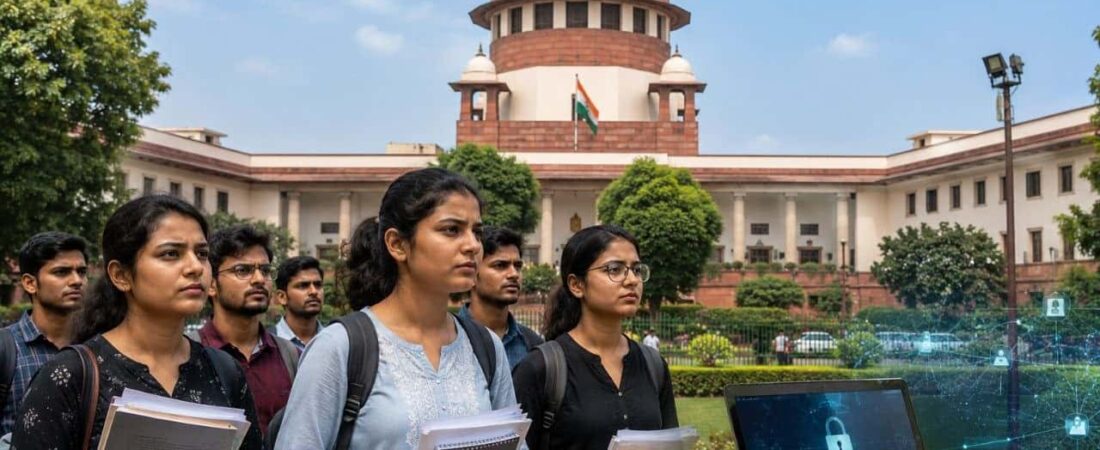
The Supreme Court on NTA Exam Reforms 2026 has put fresh focus on the way major entrance examinations are conducted in India. On August 19, 2026, the Supreme Court asked the Centre to file an affidavit explaining the steps taken to strengthen the examination system and implement key reform recommendations.
The Court stressed the need for better infrastructure, adequate manpower, stronger technology and long-term institutional reforms in NTA. But does this mean NEET or other NTA exams will now change? Not yet. No specific new exam pattern has been officially confirmed. The current focus is on making the examination system more secure, reliable and transparent.
Free NEET-JEE Coaching Programme — Students can explore this related update for additional exam preparation support.
Table of Contents
Supreme Court on NTA Exam Reforms 2026: What Happened in Today’s Hearing?
The Supreme Court has once again put the spotlight on NTA’s examination system. On August 19, 2026, the Court asked the Centre to explain the steps taken to implement key recommendations for making exams more secure and strengthening NTA’s functioning.
The Court also sought clear timelines for pending reforms, including recommendations linked to the Radhakrishnan Committee and Nandan Nilekani-led task force. For students, one thing is important: no new NEET or NTA exam pattern has been officially confirmed yet. The current focus is on improving the overall examination system.
Why Did the Supreme Court Ask the Centre for an Affidavit?
The Supreme Court wants the Centre to provide a clear picture of how far NTA exam reforms have actually been implemented. The Court has asked for details on the steps taken on recommendations made by the Radhakrishnan Committee and the Nandan Nilekani-led task force, along with timelines for the remaining work.
The purpose is not simply to introduce temporary fixes after an exam controversy. The Court wants NTA to have stronger infrastructure, adequate manpower, better technology and a more secure examination system so that major exams can be conducted reliably in the future. The Centre has been given three weeks to file the affidavit, making its response the next important development in the case.
The Supreme Court also stressed that NTA needs to develop into a stronger and more permanent institution, with adequate manpower, secure infrastructure, modern technology and institutional expertise. The Court’s focus is not just on fixing problems after an examination controversy, but on creating a system that can conduct major exams securely and reliably over the long term.
What Major Changes Are Being Considered for NTA?
The latest hearing points towards a broader strengthening of the NTA rather than one single change to the examination pattern.
Among the key areas being discussed are:
- Stronger and more secure examination infrastructure
- Adequate and specialised manpower
- Better cybersecurity systems
- Greater use of technology in examination management
- Stronger protection of examination data
- Improved monitoring and accountability
- Better question-paper security
- Permanent institutional expertise and experience
- Continuous upgrading of examination systems
The Court has specifically emphasised that NTA needs to retain institutional knowledge and expertise instead of repeatedly starting afresh whenever personnel or procedures change. Technology is also expected to play a greater role. The Court was informed that the committees had considered advanced technologies, including AI and blockchain-related approaches, to improve examination security and integrity.
However, these should currently be understood as reform directions and proposals, not as confirmation that every future NTA examination will use these technologies.
Top AI Tools Students Are Using in 2026 — Check these useful AI tools to make learning and exam preparation easier.
Will NEET and Other NTA Exams Change
The latest Supreme Court hearing has naturally raised questions among students about whether NEET and other NTA exams could see changes. For now, there is no official confirmation of a new exam pattern, syllabus or examination mode. The Court’s current focus is on strengthening NTA and implementing broader examination reforms.
For NEET students, the immediate takeaway is that there is no reason to change their preparation strategy based on this hearing alone. Aspirants should continue following the existing syllabus, exam pattern and official instructions. If any major change is approved later, NTA or the concerned authority will announce it through an official notification.
Ministry of Education – NTA Examination Reforms
What Happens Next in the NTA Reform Case?
The next major development will be the Centre’s affidavit, which the Supreme Court has asked it to file within three weeks. The response is expected to explain the steps taken to implement recommendations of the Radhakrishnan Committee and the Nandan Nilekani-led task force, along with timelines for reforms that are still pending.
After the affidavit is submitted, the Supreme Court will examine the progress and decide what further directions, if any, are required. Students should keep an eye on official NTA and government notifications for any confirmed changes in exam security, technology, examination procedures or NTA’s structure. These updates could become important as the reform process moves forward.
Until an official announcement is made, aspirants should avoid relying on rumours or unverified social media claims. For now, students should continue following the existing examination rules and focus on their preparation.
Frequently Asked Questions About NTA Exam Reforms 2026
What did the Supreme Court say about NTA reforms?
The Supreme Court stressed the need to institutionalise NTA and strengthen its infrastructure, manpower, technology and examination security. It also directed the Centre to provide an update on implementation of expert committee recommendations.
When did the Supreme Court seek the affidavit on NTA reforms?
The latest direction was issued on August 19, 2026, during the hearing concerning examination reforms. The Centre has been given three weeks to file the affidavit.
Will NEET change after the Supreme Court hearing?
No specific change to the NEET examination pattern has been confirmed merely because of this hearing. Students should wait for an official notification before assuming that the exam mode or pattern has changed.
What is the Radhakrishnan Committee?
The Radhakrishnan Committee was constituted after the NEET-UG paper-leak controversy to recommend improvements in the examination process, data security and the functioning of NTA.
What is the Nandan Nilekani committee’s role?
The Nandan Nilekani-led task force has been involved in examining structural and technology-focused reforms for competitive examinations. The Supreme Court has asked the Centre to explain how these recommendations are being implemented alongside the Radhakrishnan Committee’s recommendations.
Conclusion
The Supreme Court on NTA Exam Reforms 2026 development puts fresh focus on the need for a safer, more reliable and better-equipped examination system. By seeking an affidavit from the Centre, the Court wants clarity on how recommendations linked to the Radhakrishnan Committee and Nandan Nilekani-led task force are being implemented.
For students, the biggest takeaway is that no new NEET or NTA exam pattern has been officially confirmed yet. The reform process could bring changes to examination security, technology and NTA’s functioning, but aspirants should wait for official notifications before changing their preparation strategy.
Updated: August 19, 2026